
Exercise Library
47 exercises available• 146 locked
20 Meter Circles
Steady and relaxed without falling in/out. Consistent, curved bend in the horses body while working on a 20 meter circle.
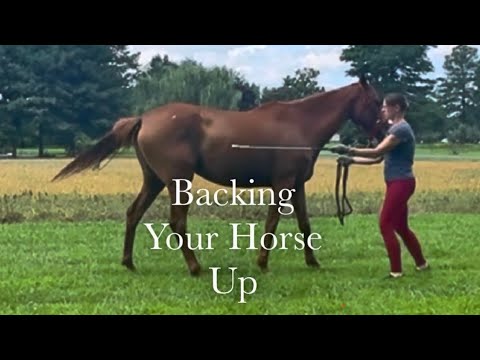
Backing Up
Backing is a two-beat gait where diagonal pairs of legs move together, similar to the trot but without suspension. Movement should be rhythmic, balanced, and controlled. Benefits: Strengthens the hindquarters, core, and stabilizing muscles while improving coordination, balance, and body awareness. Important: Backing should be slow and fluid, without dragging the feet, hollowing the back, or bracing through the neck. Focus on quality steps rather than quantity.
Bathing
Ability to stand patiently to get brushed, bathed or braided.
Bending in Corners
Ability to be balanced and even bending from poll to tail. Develops suppleness and strength in the neck, back and hindquarters.
Canter
3 beat gait with a moment of suspension. Correct lead.
Catching from Field
Allows you to approach and halter them in the field.
Desensitizing with Objects
Using unusual, but safe, objects to get the horse used to unfamiliar items and to practice their emotional control around things that make them nervous.
Drawing In
Ability to call in towards you.
Dressage Test Intro Level
List what Intro test you did and overall experience.
Dressage Test Training Level
List which training level test you did and overall experience.
Event
List what Event you did. How did it go?
Giving to Left Rein
Asking with a gentle pulsing pressure on the left rein, ask the horse to give their head and neck over to the right allowing them to release and give to the left rein.
Giving to the Right Rein
Asking with a gentle pulsing pressure on the right rein, ask the horse to give their head and neck over to the right allowing them to release and give to the right rein.
Graze Riding
This exercise can be a useful one that helps green horses get used to carrying weight with little stress on their joints since they can walk at their own pace. It has also been used to rehab horses that have developed a rearing issue. Though many reasons other than behavioral could cause rearing. Always use caution, but especially with this. Another thing to be aware of is horses that get “grass hungry” while riding, you don’t want to allow a behavior of diving for grass when not allowed.
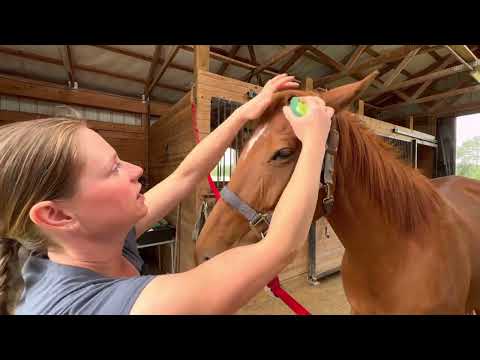
Grooming with Purpose
Cross fiber friction grooming is one of the best ways you can regularly go over your horses body and release any tension in their muscles or address itchy skin. The horse should be able to handle regular grooming as this is part of their well being routine. You can easily check for scrapes, bumps, hot or cold areas & note any areas that are itchy, or are triggering a negative response from the horse. Check out A Stable Pace, LLC YouTube channel, Playlist “Grooming Horse for Performance & Recovery” for the full list of videos.
Hand Walk around Property
Taking a green horse out for a hand walk, exploring the property it lives on.
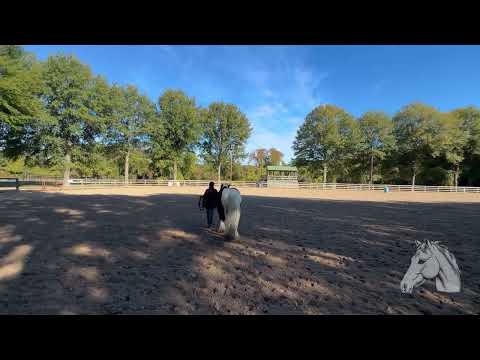
Hauling to new place
Hauling horses away from the barn can be uncomfortable in the beginning for both horses and their rider. Planning low stress days off property where you can focus on standing at the trailer, playing in a new arena, or trying out other options, if the place you go offers it, is a great way to build confidence for both your horse and yourself.
In Hand-Halter Class Practice
For horses showing in Halter Classes-Horse should stay by your side, walk or trot/jog beside you when asked and stack themselves square at the halt. They must also be patient when standing to allow the Judge to inspect them.
Lateral Poll Flexion
This exercise teaches the horse to softly yield to light lateral pressure, gently turning the head and neck to either side without resistance or bracing. It helps improve neck flexibility, poll mobility, body awareness, relaxation, and responsiveness to pressure. It also encourages the horse to release unnecessary muscle tension and develop better coordination. For green horses, this is an excellent foundational exercise before introducing the bit, helping them understand how to follow light pressure rather than resist it. Movements should remain slow, gentle, and within the horse's comfortable range of motion.
Liberty Work
Lunging
Ability to lunge walk, trot & canter following cues appropriately

Obstacle Challenge
Whether doing a full course with different obstacles, such as going over a tarp, walking through water, navigating through logs or tires, or any other creative obstacle, record what your horse did and how well they did the obstacle(s). The obstacle in the Video is a mattress with a rubber mat on top that the horse is asked to stop and stay on for several seconds.
One Rein Stop
Bringing other horses head around in a gradual turn to bring them to a stop. Do not do abruptly or you could make your horse fall.
Respects Space
Doesn't creep in towards you if not asked.
Round Penning
Working the horse in a round pen or small corral.
Sending Away
Ability to send out away from you.
Serpentine
The serpentine can be 3-4 loops that get the horse to bend around the turn, get straight, then get a new bend on the next side of the ring.
Show Day
Day out at a show. List he show you attended in the Training Notes.
Standing at Mounting Block
The horse should be able to stand still at the mounting block so you can mount them. Then they should wait for you to ask them to move off before walking away from mounting block.
Standing Still
Ability to stay still when asked to stop.
Stopping
Ability to stop square. Demonstrates good posture while balancing the weight evenly.
Straightness
Ability to stay straight, hind feet follow the front foot falls track. Develops uniform muscle development.
Stretchy Walk
The stretchy walk encourages the horse to reach forward and down into soft, elastic rein contact without rooting or losing balance. Gradually lengthen the reins while maintaining an active, rhythmic four-beat walk with free, relaxed movement. Benefits: Improves back mobility, topline flexibility, relaxation, and balance. Lengthening the neck allows the nuchal ligament to help support the head and neck, reducing muscular effort. Important: A tight or restricted neck may prevent the horse from reaching forward and down. A weak thoracic sling may make the horse feel unbalanced, as though they could fall forward, while a sore lower back can make maintaining the stretch difficult. Never force the stretch. Allow strength, balance, and flexibility to develop gradually.

Trail Ride
A good trail horse demonstrates confidence, surefootedness, emotional regulation, responsiveness to cues, and the ability to navigate unfamiliar environments while remaining connected to the rider. Builds strength, balance, coordination, body awareness, and cardiovascular fitness. Varied terrain and obstacles encourage core engagement, hindquarter strength, and mental adaptability. Introduce new environments and challenges gradually. A reliable trail horse isn't one that never reacts, but one that can process situations, respond to guidance, and regain composure.
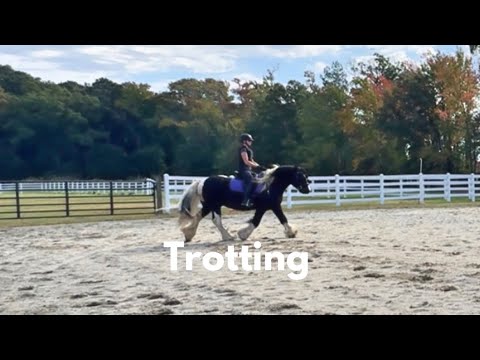
Trotting
Trot is a two-beat gait where diagonal pairs of legs move together with a moment of suspension between each stride. Trotting helps build cardiovascular fitness, strengthen the core and topline, improve balance and coordination, and develop rhythm and symmetry. It is also useful for evaluating stride quality, straightness, and how evenly the horse uses both sides of the body.
Using a Neck Rope
Going bridleless, using a neck rope.
Waiting
The horse is able to wait in the same spot you asked them without walking away until you give them the release word. *Release word should be simple, recommend “OKAY”.
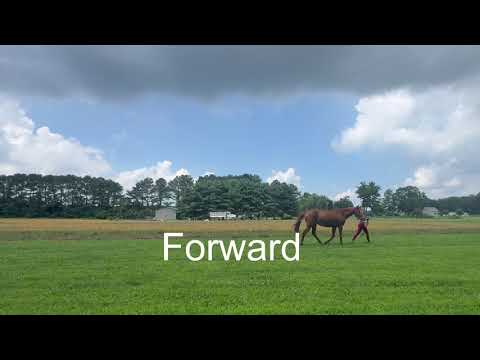
Walking
Walking is a four-beat gait where each leg moves independently in a regular rhythm. Walking helps build strength and endurance, improve balance and coordination, encourage joint mobility, and activate the core and stabilizing muscles. It is especially useful for warm-ups, conditioning, rehabilitation, and developing overall body awareness.
Walking Over Poles
Ability to walk over poles without knocking them. Proprioceptive exercise, improves core strength & increases range of motion.
Walking Over Tarp
Ability to walk over a tarp. Increases confidence and trust. Allows you to observe how they handle a "scary" object.
Walking Past Scary Object
Ability to go past a scary object. Builds confidence and trust. Allows you to observe how they respond to passing a scary object.
Wearing Tack
Horse wears tack, saddle, bridle.
Western Barrel Pattern
Setting up 3 markers, or barrels, the horse does a barrel racing pattern around them.
Working in New Area
Exploring and working in a new area on the farm or away.
Working on Hard Surface
Controlled exercise on firm, even surfaces can help strengthen bones, tendons, and ligaments by gradually exposing them to increased mechanical loading. Benefits: Encourages bone density, supports tendon and ligament adaptation, and improves proprioception, coordination, and stability.
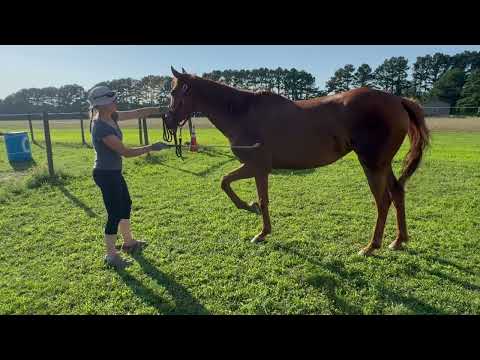
Yielding Front End
Yielding the Front End (Adduction/Abduction) asks the horse to move the shoulders sideways, with the front legs stepping across and away from the body while maintaining control of the hindquarters. It helps improve shoulder mobility, front-leg coordination, balance, body awareness, and control of the forehand. It also strengthens the muscles that stabilize and move the shoulder and thoracic sling.
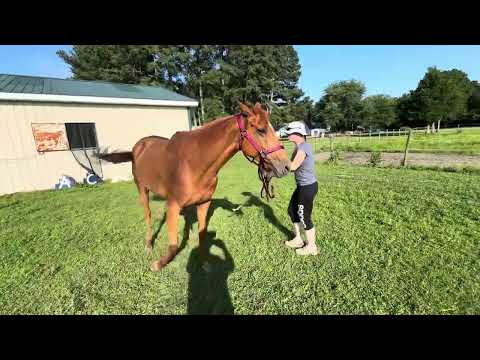
Yielding Hind End
Yielding the Hind End (Adduction/Abduction) asks the horse to move the hindquarters sideways, with the hind legs stepping across and away from the body while maintaining control of the front end. It helps improve hip and pelvic mobility, hind-leg coordination, balance, body awareness, and control of the hindquarters. It also helps strengthen the muscles that stabilize and move the hips and pelvis.